

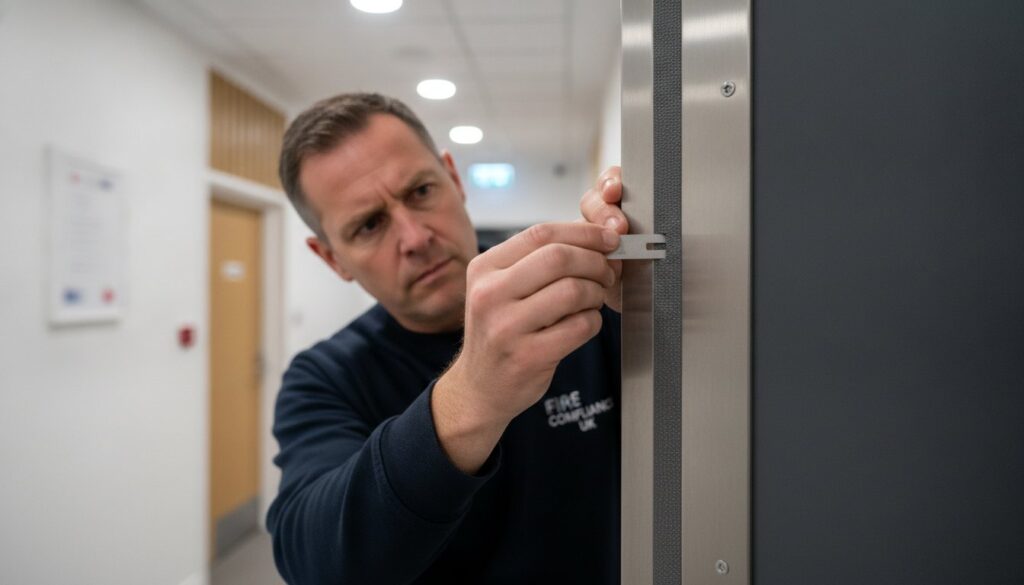
A fire door without functioning seals is essentially a failed barrier, yet these small components are often the most overlooked during routine building checks. Understanding exactly when to replace fire door seals is not just a matter of good maintenance; it’s a fundamental legal requirement under the latest UK safety frameworks. As a responsible person, you likely feel the weight of ensuring compliance while avoiding unnecessary costs, especially with the implementation of the BS 8214:2026 standard.
This guide provides the clarity you need to manage your passive fire protection with confidence. We’ll identify the physical triggers for replacement, such as delamination or permanent compression, and explain the regulatory timelines mandated for commercial and industrial environments. By the end of this article, you will have a clear checklist for your next inspection and a structured path for professional remedial works that guarantee occupant safety and legal peace of mind.
Key Takeaways
- Identify the specific physical triggers for replacement, including delamination of intumescent strips and mechanical wear on cold-smoke brushes.
- Establish a clear understanding of when to replace fire door seals based on current UK legislative frameworks and the rigorous BS 8214:2026 standards.
- Learn how to maintain building certification by ensuring replacement seals precisely match original manufacturer specifications and specific fire-rating dimensions.
- Understand why professional fire door surveys are critical for uncovering hidden failures that standard internal inspections typically miss.
- Develop a methodical approach to remedial maintenance that balances strict safety compliance with long-term building security.
The Critical Function of Intumescent and Smoke Seals
A fire door is a precision-engineered safety system where seals play the most critical role during an emergency. These components act as the primary defense against the spread of toxic gases and flames through the essential gaps between the door leaf and its frame. Without functional seals, even the highest quality door leaf will fail to achieve its rated integrity, whether that is FD30 or FD60. Understanding when to replace fire door seals is a fundamental responsibility for any building manager tasked with maintaining passive fire protection standards.
The integrity of a fire compartment depends on the continuity of these seals. If a seal is damaged or missing, the door cannot perform its legal function of containing a fire for the specified duration. This failure places occupants at risk and exposes the organization to significant liability under UK fire safety legislation. Our approach focuses on ensuring these barriers remain reliable through methodical inspection and accredited maintenance protocols.
How Intumescent Material Protects the Compartmentation
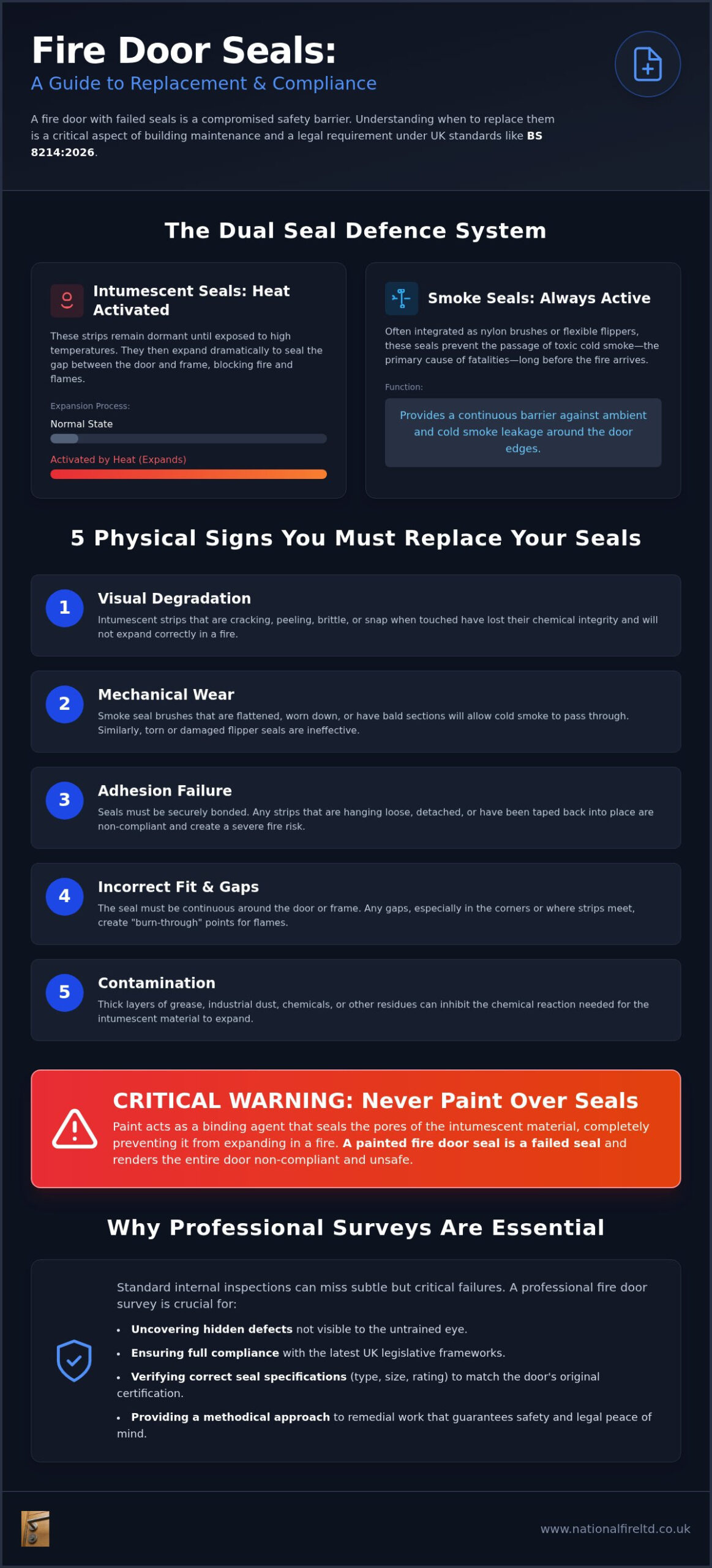
Intumescence is the process of expanding to seal gaps when exposed to high temperatures. These strips typically contain materials like graphite or sodium silicate that undergo a chemical reaction when heat reaches a specific threshold. Upon activation, the material expands to many times its original volume, filling the void between the door and the frame with a robust, fire-resistant char. This expansion is what prevents “burn-through” points where flames could otherwise bypass the door. For the compartmentation to remain effective, the seal must be continuous. Any gaps caused by peeling, cracking, or partial removal create a path of least resistance for fire, rendering the entire doorset non-compliant.
The Role of Combined Fire and Smoke Seals
While intumescent strips react to heat, smoke is often the primary cause of fatalities in commercial corridors long before flames reach the door. This necessitates the use of smoke seals, which usually take the form of nylon brushes or flexible polymer flippers. These components prevent the passage of cold smoke before the intumescent material has reached the temperature required for activation. UK building regulations mandate smoke-stopping capabilities in specific areas, such as protected escape routes and lift lobbies. Determining when to replace fire door seals involves a dual assessment: you must check the intumescent strip for physical degradation and the smoke seal for mechanical wear, such as flattened brushes or torn flippers, which would allow lethal smoke to penetrate the barrier.
5 Physical Signs You Must Replace Your Fire Door Seals
Maintaining a secure environment requires a precise understanding of component failure. While the door leaf itself might appear sturdy, the seals are susceptible to gradual degradation from building movement, temperature fluctuations, and physical impacts. Knowing exactly when to replace fire door seals involves looking for specific indicators that the passive fire barrier has been compromised. A methodical visual audit should focus on the following five critical signs of failure:
- Visual Degradation: Intumescent strips that show signs of cracking, peeling, or brittleness have lost their chemical efficacy. If the material snaps when touched, it won’t expand correctly during a fire.
- Mechanical Wear: Smoke seals, particularly brushes and flippers, must maintain their shape to be effective. Flattened, worn, or bald sections allow cold smoke to bypass the door before heat activation occurs.
- Adhesion Failure: Seals must be securely bonded to the door or frame. If strips are hanging loose or, worse, have been taped back into place using standard adhesives, the door is no longer compliant.
- Incorrect Fit and Gaps: A fire door seal must be continuous. Gaps where the seal ends too early or fails to meet the corners create high-risk “burn-through” points.
- Contamination: The presence of thick grease, industrial dust, or chemical residue can inhibit the expansion process.
For a more technical breakdown of the requirements, industry standards emphasize that any interruption in the seal’s continuity compromises the doorset’s certification. Engaging a specialist for professional fire door maintenance ensures these defects are caught before they lead to a failed fire risk assessment.
The Danger of Painted Fire Door Seals
One of the most common yet dangerous maintenance errors is painting over intumescent strips. Paint acts as a binding agent that seals the pores of the intumescent material, preventing the chemical reaction required for expansion under heat. During a routine walk-through, look for seals that match the color of the door frame or show “bridging” where paint has filled the gap between the seal and the groove. Once a seal is contaminated with paint, it’s impossible to restore its function. Full replacement is the only accredited method for addressing this failure and restoring the door’s fire rating. We’ve seen many instances where aesthetic updates have inadvertently compromised safety, making it essential to educate on-site painting contractors about these components.
Assessing Brush and Flipper Degradation
Smoke seals rely on “memory” to maintain a constant touch-point with the frame. In high-traffic commercial environments, constant opening and closing cause these components to lose their elasticity. You can identify this failure by checking if the brush or flipper still makes contact with the frame when the door is latched. If you see light through the gap, the seal has failed. Additionally, look for “kinked” seals that have been crushed or moved out of alignment. These often prevent the door from closing and latching correctly, which is a critical failure in any fire safety system. If the door doesn’t latch, it won’t stay closed under the pressure of a fire, regardless of the seal’s condition.
Compliance Timelines: When Does the Law Mandate Replacement?
The legal framework for building safety is rigid. Under the Regulatory Reform (Fire Safety) Order 2005, the “Responsible Person” carries the absolute burden of ensuring all fire safety equipment is fit for purpose. This includes the meticulous maintenance of fire doorsets. Knowing when to replace fire door seals is not a matter of choice but a reaction to standardized inspection results. While the current BS 8214:2026 standard mandates that fire doors be treated as complete systems, it recommends inspections at least every six months. Any defect identified during a fire door survey requires immediate remedial action to maintain the building’s fire-rated integrity.
Delaying replacement once a fault is noted is a breach of statutory duty. In high-traffic commercial environments, such as hospitals or retail centers, seals are prone to accelerated wear. These settings often demand quarterly or even monthly assessments to ensure compliance. If a seal is compromised, the doorset is legally considered non-functional. We ensure that our clients transition from identifying these faults to executing accredited remedial works without delay.
Fire Safety Act 2021 and Commercial Responsibility
The Fire Safety Act 2021 has significantly increased the scrutiny placed on individual components like intumescent strips. This legislation clarifies that fire doors are part of the building’s structure and fall under the scope of the Fire Safety Order. Failing to act on a noted defect in a risk assessment can lead to severe legal consequences, including heavy fines or prosecution. We emphasize the role of professional documentation in this process. Maintaining a clear “Golden Thread” of information proves due diligence. It shows that you’ve identified risks and addressed them through accredited methods, providing a robust defense in the event of an audit or incident.
Risk-Based Inspection Intervals
Determining the correct frequency for your checks depends on several operational factors. Door usage frequency is the primary driver; a door cycled fifty times a day will fail much faster than a plant room door. The presence of vulnerable occupants and the building’s height also escalate the risk profile. Integrating these seal checks into a broader passive fire protection strategy ensures that no single point of failure goes unnoticed. A disciplined schedule allows for predictable maintenance costs and prevents the urgency of emergency repairs. We provide the technical oversight necessary to establish these intervals based on the unique requirements of your facility.
Technical Standards for Correct Seal Replacement
Precision is the cornerstone of passive fire protection. Replacing a seal isn’t merely a maintenance task; it’s a restoration of a tested safety system. To maintain the validity of a fire doorset’s certification, replacement seals must precisely match the original manufacturer’s specification. Deviating from these specifications, even by a few millimeters, can result in the door failing to perform during a fire. Our technical approach ensures that every replacement adheres to the rigorous standards required for commercial safety.
Standardized dimensions are critical for compliance. Most FD30 doors require 15mm x 4mm intumescent strips, while FD60 doors typically utilize 20mm x 4mm strips. These sizes are not interchangeable. Using a smaller seal in a larger groove, or vice versa, creates inconsistencies in expansion pressure. Compatibility is another vital factor. You should never mix different brands or types of intumescent material, such as graphite and sodium silicate, within the same doorset. They react at different temperatures and rates, which can lead to uneven sealing.
Proper installation is as important as the material itself. Seals must be fitted into a clean, dry groove. Any dust or moisture prevents the adhesive from bonding correctly. Beyond the adhesive bond, the strips must be continuous, with no gaps at the junctions or corners. Precision here prevents “burn-through” points that compromise the entire compartment. We prioritize a methodical installation process to ensure the long-term reliability of the barrier.
Matching Seals to Fire Door Ratings
Identifying the correct fire rating is the first step in determining when to replace fire door seals with the appropriate components. You can usually find this information on the certification label located on the hinge edge of the door leaf. An FD30 door is designed to provide 30 minutes of protection, whereas an FD60 door provides double that duration. The risk of using under-specified seals in a high-rated door is absolute failure. The door’s core material, often referred to as the “plug,” dictates the volume of intumescent expansion required to bridge the gap between the leaf and frame. If the seal doesn’t provide enough char, the door will fail its integrity test.
Maintaining Third-Party Certification
Executing remedial works through accredited installers is the only way to guarantee continued compliance. Incorrect seal replacement doesn’t just put lives at risk; it can void the door’s fire rating and invalidate your building insurance. We emphasize the value of third-party certification, such as BM TRADA, which provides a traceable record of professional competence. Using a certified partner ensures that every component used is compatible with the original fire test evidence. For comprehensive oversight and technical excellence, book a professional fire door survey to ensure your assets remain compliant.
Why Professional Fire Door Surveys are Essential
Internal visual inspections performed by untrained staff frequently fail to identify the subtle indicators of component failure. A staff member might notice a missing strip, but they rarely have the technical training to identify incorrect specifications, such as an FD30 seal fitted into an FD60 frame. Knowing exactly when to replace fire door seals requires more than a casual glance; it demands a methodical assessment of the entire doorset’s mechanical and chemical state. A professional survey removes the ambiguity of compliance, providing building managers with a definitive roadmap for remedial action.
Professional surveys shift the focus from reactive repairs to a proactive maintenance model. By identifying minor issues like hinge wear or slight seal delamination early, you prevent the need for full doorset replacements later. This approach doesn’t just save costs; it ensures that the building remains a secure environment for all occupants. We provide the technical oversight necessary to bridge the gap between identifying a fault and executing a certified resolution.
The Scope of a Professional Fire Door Audit
A comprehensive audit examines every element of the fire door system in a single, disciplined process. Our surveyors evaluate the leaf, frame, hinges, closers, and seals to ensure they work in unison as a tested assembly. We measure gaps with precision and test closing forces to guarantee the door latches correctly every time. This data is then compiled into digital reports, which are essential for your fire safety logbook and long-term compliance records. Using this survey data allows for the strategic planning of fire compartmentation budgets, ensuring that maintenance funds are allocated where the risk is highest. This level of documentation provides the “Golden Thread” of information required by modern UK safety standards.
National Fire Ltd: Your Partner in UK Compliance
National Fire Ltd operates as a specialist contractor for passive fire protection across the UK. We focus exclusively on the commercial and industrial sectors, providing the authoritative reassurance that building managers require in high-stakes environments. There is a significant operational benefit to using a single contractor for both the initial surveying and the subsequent remedial maintenance. It ensures that the person performing the repairs fully understands the technical nuances identified during the audit. Our team is deeply committed to maintaining the highest standards of safety and reliability. If you’re uncertain about the current state of your passive fire barriers, contact our team for a professional assessment of your building’s fire doors to ensure your facility remains fully compliant and secure.
Securing Your Building Through Methodical Maintenance
Fire door seals aren’t mere accessories; they’re the active components of a passive fire barrier that demand rhythmic, evidence-based replacement. Knowing when to replace fire door seals involves a dual focus on physical degradation, such as delamination or mechanical wear, and strict adherence to the inspection intervals recommended by BS 8214:2026. Maintaining these standards ensures your facility remains compliant with the Regulatory Reform (Fire Safety) Order 2005 and the Fire Safety Act 2021.
As specialist passive fire protection contractors, we understand the technical precision required to match replacement seals to original manufacturer specifications. Our team provides comprehensive UK-wide surveying services to identify compliance gaps before they escalate into safety risks. We bring a high level of expertise in commercial compliance standards to every project, moving your organization from reactive repairs to a proactive safety strategy.
Book a Professional Fire Door Survey with National Fire Ltd to secure your environment with confidence. Taking these methodical steps today provides the authoritative reassurance that your building and its occupants are protected by a fully functional fire safety system.
Frequently Asked Questions
How often should fire door seals be inspected?
Fire door seals should be inspected at least every six months as recommended by the BS 8214:2026 standard. In high-traffic commercial settings, such as hospital corridors or retail entrances, these checks often occur quarterly or monthly. Regular inspections allow the responsible person to determine when to replace fire door seals before a safety failure occurs. All findings should be documented in the building’s fire safety logbook to ensure a traceable record.
Can I replace fire door seals myself?
While building owners can technically purchase components, professional installation is essential to maintain the door’s third-party certification. Replacing seals incorrectly or using the wrong specification can void the fire rating and invalidate insurance policies. We recommend utilizing accredited contractors for all remedial works. This ensures that the replacement material matches the original test evidence and is installed without gaps or adhesion failures that compromise the barrier’s reliability.
Do fire door seals need to be replaced if they are painted over?
Yes, fire door seals must be replaced immediately if they have been painted over. Paint acts as a binding agent that prevents the intumescent material from expanding when exposed to heat. This chemical reaction is the primary mechanism that seals the gap between the leaf and frame during a fire. Once contaminated by paint, the seal is non-functional and cannot be cleaned; a full replacement is the only accredited method for restoration.
What is the difference between an intumescent strip and a smoke seal?
An intumescent strip is a heat-reactive component that expands to fill gaps during a fire, while a smoke seal prevents the passage of cold smoke. Smoke seals usually consist of nylon brushes or flexible polymer flippers. Both components are necessary for comprehensive protection. The smoke seal acts immediately during the early stages of a fire, whereas the intumescent strip activates once temperatures reach the threshold required for its chemical expansion.
Is it a legal requirement to have seals on all fire doors?
Yes, seals are a legal requirement for any door designated as a fire-resisting doorset under UK building regulations. A door cannot achieve its FD30 or FD60 rating without functional intumescent strips. These components are integral to the tested assembly. Failing to maintain these seals is a breach of the Regulatory Reform (Fire Safety) Order 2005, which places the legal responsibility for passive fire protection on the designated responsible person.
How do I know what size fire door seal I need?
You should refer to the original manufacturer’s test evidence or the certification label located on the hinge edge of the door leaf. Standard commercial FD30 doors typically require a 15mm x 4mm seal, while FD60 doors usually demand a 20mm x 4mm specification. It’s critical to measure the existing groove with precision. Using an incorrectly sized seal will prevent the material from creating the necessary pressure to stop flame spread effectively.
Can missing seals cause a fire door to fail its inspection?
Missing seals will cause an automatic failure during a fire risk assessment or a professional fire door survey. The absence of a seal means the door cannot perform its primary function of containing fire and smoke. This is considered a major non-compliance that requires immediate remedial action. Professional surveyors look for continuity along the entire frame; any missing sections create high-risk “burn-through” points that compromise the building’s compartmentation strategy.
What happens if the intumescent seal is damaged but the smoke seal is fine?
The doorset remains non-compliant even if only one type of seal is damaged. The intumescent strip and the smoke seal perform distinct, essential functions that work in tandem. If the intumescent material is cracked or missing, the door will fail to hold back flames once heat builds up. Determining when to replace fire door seals involves assessing both components; if either shows signs of failure, the entire strip must be replaced to restore integrity.