

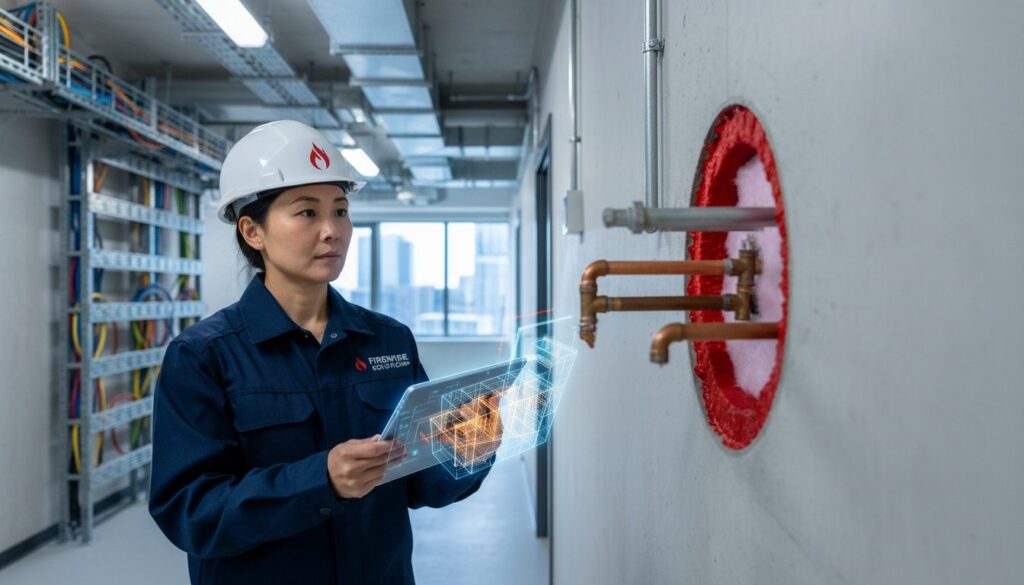
The “fit and forget” mentality in passive fire protection is a dangerous myth that risks both life and legal liability. While many property managers assume these materials last the life of the building, the reality of fire stopping product lifespan is a managed lifecycle that often requires intervention every five to fifteen years. As we approach the September 30, 2026, implementation of the latest Approved Document B amendments, the era of undocumented legacy installations is officially over.
We recognize the significant challenge of managing undocumented fire stopping in older assets while striving to maintain the “Golden Thread” of information. This guide provides the technical clarity you need to move from uncertainty to authoritative oversight. You’ll gain a clear understanding of “assumed working life” and learn how to establish a disciplined framework for identifying life-expired materials. We will outline the essential steps to ensure your estate meets the rigorous Building Safety Act 2026 standards, providing a methodical path toward total compliance and the psychological benefit of a secure environment.
Key Takeaways
- Understand the distinction between a manufacturer’s “assumed working life” and a performance guarantee to ensure your fire safety strategy remains technically sound.
- Identify how environmental stressors, such as structural vibration and moisture ingress, can prematurely degrade materials and compromise the fire stopping product lifespan.
- Learn how to integrate specific product batch data and installation dates into your digital records to satisfy the “Golden Thread” requirements of the Building Safety Act.
- Establish a methodical framework for regular fire compartmentation surveys to identify “contractor creep” and prioritize remedial works across large-scale commercial estates.
Defining the Assumed Working Life of Fire Stopping Products
The term “assumed working life” serves as a critical regulatory benchmark within the passive fire protection industry. It represents the period during which a product is expected to maintain its performance, provided it is correctly installed and maintained. Crucially, this is not a legal guarantee of performance. Instead, it acts as a structured design parameter that allows architects and safety managers to plan for future maintenance and replacement cycles. Under the 2026 amendments to Approved Document B, documenting these lifespans has become a non-negotiable requirement for compliance. Unlike previous decades where documentation was often fragmented, modern standards demand a precise record of when a product’s effectiveness may begin to diminish.
A Firestop system is only effective if its constituent materials remain chemically and physically stable. There is a fundamental distinction between a product’s fire rating, which measures how many minutes it resists a blaze, and its functional longevity. While a mortar might provide a four-hour fire rating, its fire stopping product lifespan depends entirely on its ability to withstand environmental degradation over decades. If a material’s chemical properties degrade, that four-hour rating effectively becomes zero. This reality necessitates a disciplined approach to asset management where materials are replaced before they reach the end of their predicted utility.
EOTA TR024 Durability Categories
The European Organisation for Technical Assessment (EOTA) provides a rigorous framework for these assessments through Technical Report TR024. This report categorises materials based on their durability and intended end-use conditions, ensuring that products are fit for their specific environment.
- Type X: These products are engineered for all environmental conditions, including internal, semi-exposed, and fully exposed external applications. They represent the highest tier of durability.
- Type Y: Designed for internal and semi-exposed conditions, these materials can handle temperatures below zero but lack protection against direct UV or heavy rain.
- Type Z: These are strictly for internal dry conditions where humidity and temperature are controlled. Using a Type Z product in a damp basement is a common cause of premature system failure.
The 10 vs. 25 Year Standard
Industry standards typically designate two primary tiers for assumed life. Most intumescent sealants and mineral wool batts target a 25-year assumed life, reflecting their stability in protected internal environments. However, certain reactive coatings or specialized injectable barriers may only carry a 10-year lifespan. This shorter duration often stems from the chemical complexity of the materials or their susceptibility to environmental fluctuations. Understanding the technical factors that dictate a fire stopping product lifespan allows for proactive estate management rather than reactive crisis response.
Assumed working life is a design expectation used for maintenance planning to ensure the building’s fire strategy remains robust throughout its lifecycle.
Environmental and Structural Factors Influencing Product Longevity
A building is a dynamic environment, not a static monument. The fire stopping product lifespan is not just a manufacturer’s estimate; it’s a variable subject to the building’s operational reality. While a product might be rated for 25 years in a laboratory, structural vibrations from heavy machinery or nearby rail lines can cause rigid materials like fire mortars to develop micro-fractures. These cracks compromise the smoke-seal integrity. This makes the installation non-compliant long before the theoretical expiry date. Our role as guardians of safety is to recognize these environmental stressors before they compromise the building’s compartmentation.
Thermal cycling also plays a significant role in material degradation. Building services, particularly hot water pipes and steam lines, expand and contract throughout the year. This constant mechanical stress tests the adhesive bonds of intumescent sealants. If the material lacks the necessary elasticity, it will eventually pull away from the substrate. This process, known as debonding, creates a clear path for fire and smoke. Following FCIA guidance on firestop ratings is essential for understanding how environmental ratings impact real-world durability. It’s often the invisible environmental factors that dictate when a system is no longer fit for purpose.
Structural Movement and Mechanical Stress
Mechanical fatigue is a primary driver of premature failure in high-traffic commercial buildings. Dynamic joints, where two structural elements meet and move independently, require specialized flexible solutions. Using a standard rigid batt or mortar in these areas is a common error that leads to total system failure. Signs of fatigue often manifest as visible gaps or “alligatoring” on the surface of the seal. Identifying these issues early through professional compartmentation surveys ensures that minor wear doesn’t escalate into a major compliance breach. We often see failures where rigid mortars have been used around vibrating ductwork, leading to separation from the surrounding wall.
Atmospheric and Chemical Degradation
Environmental conditions vary wildly between a climate-controlled office and a semi-exposed car park. UV exposure can cause certain polymer-based seals to become brittle and lose their intumescent properties. Similarly, high humidity in basement plant rooms can lead to the softening of mineral wool batts if they are not correctly coated. In healthcare or industrial settings, exposure to harsh cleaning chemicals or airborne solvents can degrade the chemical structure of seals. Selecting high-specification passive fire protection tailored for these specific harsh environments is the only way to safeguard the fire stopping product lifespan. Without this specificity, materials may fail to react correctly during a fire event.

Compliance, Handover Information, and the Golden Thread
The Building Safety Act has fundamentally transformed the legal landscape for property owners and managers. It’s no longer sufficient to simply install a compliant product; you must now demonstrate its ongoing validity through a digital “Golden Thread” of information. This requirement ensures that every safety-critical component is tracked from the moment of installation through to its eventual decommissioning. A comprehensive record of the fire stopping product lifespan ensures that future safety managers aren’t left guessing about the integrity of the building’s seals, particularly as materials age and environmental factors take their toll.
Handover information serves as the essential bridge between the construction phase and the operational life of the building. To remain compliant with 2026 standards, this documentation must move beyond generic certificates of completion. It needs to include granular data such as specific product batch numbers, precise installation dates, and the manufacturer’s stated expected lifespan. Without this level of detail, it’s impossible to establish an accurate maintenance schedule or predict when remedial works will become necessary. Accurate fire compartmentation records serve as the foundation for this lifecycle management, allowing for a disciplined approach to building safety.
The Building Safety Act and Life-Cycle Data
Maintaining the Golden Thread is a continuous process that requires a shift away from traditional, paper-based record-keeping. For high-rise residential buildings and complex commercial structures, digital records are now a mandatory requirement. These records must be easily accessible, verifiable, and updated whenever maintenance or modifications occur. The Golden Thread ensures fire stopping remains compliant throughout the building lifecycle by providing a continuous, verifiable record of all safety-critical components. This data-driven approach eliminates the uncertainty that often plagues legacy buildings where fire stopping has been poorly documented or altered by subsequent contractors.
The Duties of the Responsible Person
Under current legislation, the Responsible Person carries the legal weight of ensuring the building remains safe for its occupants. This duty includes a mandatory requirement to review and update Fire Risk Assessments (FRAs) as materials approach their end-of-life. It’s a proactive responsibility; you can’t wait for a failure to occur before taking action. Maintenance plans must specifically account for the gradual replacement of life-expired systems to avoid the budgetary shock of large-scale remedial works. We strongly advocate for the use of third-party accredited installers to ensure that the data entered into your Golden Thread is accurate, reliable, and legally defensible. This meticulous attention to detail provides the authoritative reassurance that your building remains fully compliant with the latest national standards.
The Myth of ‘Fit and Forget’: Why Regular Surveys are Essential
The assumption that passive fire protection requires no maintenance because it lacks mechanical components is a significant oversight in building management. While it’s true that a fire seal has no moving parts, its ability to perform during a crisis is constantly under threat. A fire stopping product lifespan can be abruptly cut short by external interference or environmental shifts that occur long after the initial installation. Relying on the “set it and forget it” philosophy ignores the operational reality of commercial buildings where service upgrades and structural changes are frequent occurrences.
A primary driver of system failure is “contractor creep.” This occurs when electrical, IT, or HVAC technicians install new services through existing fire-rated compartments. Often, the original seal is breached to accommodate a new cable or pipe, and the resulting void is either left open or filled with non-compliant materials like standard expanding foam or scrap insulation. These hidden failures are frequently located above suspended ceilings or within locked riser cupboards, making them invisible to the untrained eye. To maintain a secure environment, professional fire door and compartmentation surveys should be conducted every one to three years to verify that the building’s defensive layers remain intact.
Contractor Disturbance and Remedial Needs
Minor repairs and facility upgrades are the most common points of failure for passive fire systems. When a technician compromises a penetration seal, they effectively void the entire compartment’s fire rating. Visual inspection by a qualified professional is the only reliable method to verify that the integrity of these seals has not been compromised. We frequently identify instances where “stuffing” holes with glass wool has been used as a makeshift solution, which offers no resistance to the passage of smoke or flame. Ensuring that every breach is remediated using an accredited method is essential for legal compliance.
Ageing Materials and Brittleness
Chemical degradation is an inevitable factor in the fire stopping product lifespan. Over time, sealants that were once flexible can become brittle, leading to cracking or complete separation from the substrate. In spray-applied fire protection coatings, this ageing process can manifest as delamination, where the material begins to flake away from the structural steel it is meant to protect. Regular surveys identify these physical signs of distress before they are flagged in a mandatory Fire Risk Assessment, allowing for planned maintenance rather than emergency repairs. To ensure your building remains a guardian of life and property, book a comprehensive fire compartmentation survey with our expert team today.
Strategic Remediation: When to Replace Life-Expired Fire Stopping
Managing a large commercial estate requires a transition from reactive repairs to a disciplined, phased remediation strategy. Identifying the end of a fire stopping product lifespan across hundreds of service penetrations is a complex undertaking that demands a methodical approach. We recommend a structured replacement program that aligns with your capital expenditure cycles, ensuring that safety is never compromised by budgetary constraints. The first step in any compliant replacement project is a comprehensive compartmentation survey. This professional audit establishes a baseline of existing conditions and allows for the creation of updated technical drawings that reflect the current building layout.
Technological advancements in passive fire protection offer opportunities to enhance building safety during the remediation phase. Upgrading to modern, high-performance injectable cavity barriers provides a more reliable seal in difficult-to-access voids compared to traditional mineral wool batts. These systems are specifically designed to accommodate structural movement while maintaining a robust fire and smoke seal over decades. By integrating these advanced materials into your replacement strategy, you extend the functional life of your building’s fire protection and simplify future maintenance requirements. Proactive replacement is always more cost-effective than emergency remediation following a failed Fire Risk Assessment.
Risk-Based Prioritisation
Not all compartment lines carry the same level of risk. In a healthcare environment where occupants may be non-ambulant, the integrity of fire stopping is a critical life-safety requirement that takes precedence over a standard commercial office space. We prioritise remediation by focusing on high-risk compartment lines and primary evacuation routes first. This risk-based approach ensures that resources are deployed where they provide the greatest protection for life and property. Evaluating the cost-benefit of total replacement versus targeted remedial work is a key part of our consultancy. All new installations must meet the rigorous 2026 testing standards to ensure long-term compliance and reliability for the remainder of the building’s operational life.
Partnering with National Fire Ltd for Compliance
Our organisation serves as a steadfast partner in your building safety journey. We provide a unified front of experts who handle everything from comprehensive fire compartmentation surveys and technical strategy drawings to the meticulous installation of fire stopping systems. Our disciplined approach ensures that every remedial action is documented, maintaining the integrity of your Golden Thread for the years to come. Whether you require fire door maintenance, floor plan generation, or the installation of injectable cavity barriers, we stand behind every assessment and technical solution we provide. Contact National Fire Ltd today for a professional assessment of your building’s fire stopping lifespan.
Securing Building Integrity Through Lifecycle Management
Maintaining the integrity of a building’s compartmentation requires a shift from reactive maintenance to a disciplined lifecycle approach. The fire stopping product lifespan isn’t a static figure but a variable influenced by structural movement, environmental degradation, and the inevitable disturbance caused by third-party contractors. Adhering to the 2026 standards of the Building Safety Act means moving beyond basic compliance and embracing the digital Golden Thread. This ensures that every safety barrier is documented, tracked, and replaced before its performance is compromised.
We are a specialist contractor dedicated to the commercial and industrial sectors, providing national coverage for passive fire protection. Our team offers deep expertise in technical fire strategy drawings and floor plan generation, ensuring your safety records are as precise as your physical installations. By partnering with experts, you move from uncertainty to authoritative oversight, safeguarding both your assets and the lives within them. Don’t leave your legal obligations to chance; professional oversight is the only way to guarantee stability in the face of potential danger.
Taking proactive steps today ensures your estate remains a bastion of safety and stability for years to come.
Frequently Asked Questions
Do fire stopping products have an expiry date?
Fire stopping products possess an “assumed working life” rather than a traditional expiry date, typically ranging from 10 to 25 years. This timeframe is a technical design parameter based on durability testing under specific environmental conditions. Once a material exceeds this window, its chemical stability and reactive properties may no longer meet the original fire-resistance rating. Professional assessments are essential to determine if the fire stopping product lifespan has reached its functional end.
How often should fire stopping be inspected in a commercial building?
We recommend conducting professional fire compartmentation surveys every one to three years to ensure continued compliance. This frequency allows for the identification of structural movement or unauthorized breaches caused by third-party contractors. More frequent inspections are necessary following significant electrical or HVAC upgrades where penetration seals are likely to have been disturbed. This disciplined approach ensures that the building’s defensive layers remain intact and fully operational.
Can I use different brands of fire stopping products together?
Mixing different brands of fire stopping products within a single penetration is generally prohibited unless supported by specific combined testing. Fire protection systems are tested as complete, unified assemblies; substituting components from different manufacturers can lead to unpredictable performance during a fire. To maintain authoritative reassurance of safety, installers must strictly adhere to the manufacturer’s tested details. Using a single, accredited system is the only way to ensure legal and technical compliance.
What happens to fire stopping materials as they age?
Ageing fire stopping materials undergo physical and chemical changes that compromise their ability to resist fire and smoke. Flexible sealants often become brittle and crack, leading to a loss of adhesion with the substrate. In spray-applied coatings, delamination can occur, causing the material to flake away from structural elements. These physical signs of distress indicate that the material can no longer perform its vital function, signaling the end of the fire stopping product lifespan.
Is it a legal requirement to replace fire stopping after 25 years?
There is no single statutory date for replacement, but the Building Safety Act requires the Responsible Person to ensure all safety systems remain functional. If a product has exceeded its 25-year assumed working life, it must be professionally assessed for signs of degradation. If the material is found to be life-expired or lacks proper documentation, replacement is necessary to satisfy your legal obligations. Maintaining outdated or undocumented materials creates a significant risk during regulatory audits.
How do I know if my fire stopping has been compromised by other contractors?
Compromised fire stopping is often identified by visible gaps around service penetrations or the presence of non-compliant fillers like standard expanding foam. You may notice new cables or pipes passing through an existing seal that has been crudely breached and poorly repaired. Because many of these defects are hidden above suspended ceilings or within riser cupboards, a professional survey is the only reliable method to verify that “contractor creep” hasn’t undermined your compartmentation.
What is the “Golden Thread” in relation to fire stopping products?
The Golden Thread is a mandatory digital record that tracks the design, installation, and maintenance history of all safety-critical components. For fire stopping, this includes granular data such as product batch numbers, precise installation dates, and the expected functional longevity. This digital record ensures that safety information is transparent and accessible throughout the building’s lifecycle. It eliminates the uncertainty associated with legacy buildings where fire stopping remains undocumented or improperly managed.
Can environmental factors like humidity shorten fire stopping lifespan?
Environmental stressors such as high humidity, UV exposure, and chemical fumes significantly accelerate the degradation of passive fire protection materials. Moisture ingress can soften mineral wool batts and weaken adhesive bonds, while UV light causes certain polymer-based seals to become brittle. In harsh industrial or healthcare settings, you must select products with durability ratings tailored to those specific conditions. Ignoring these atmospheric factors often leads to the premature failure of the entire fire stopping system.