

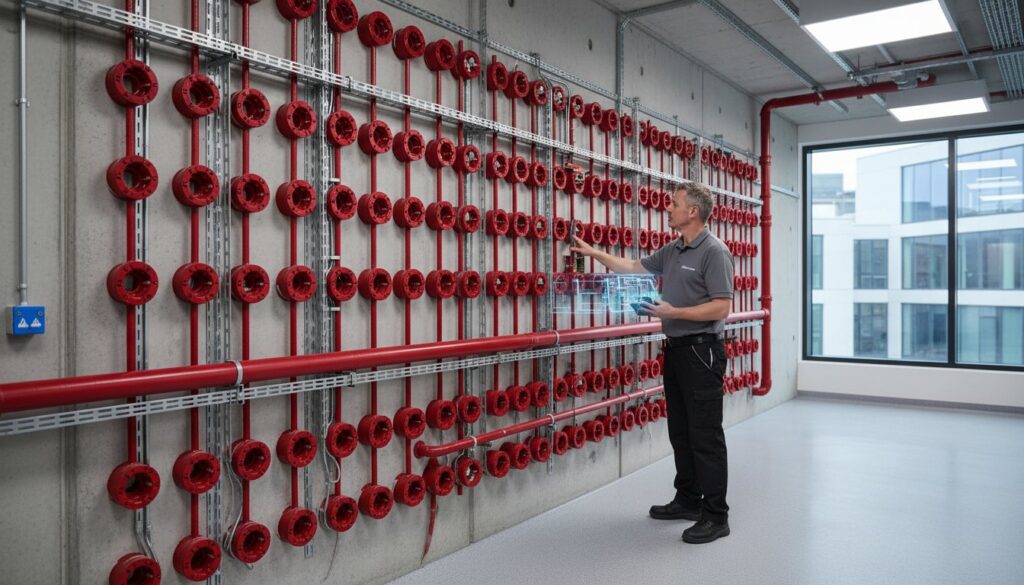
A single unsealed 100mm pipe penetration can allow smoke and toxic gases to bypass a fire-rated wall in less than four minutes, rendering your entire passive fire protection strategy useless. For building managers, the complexity of managing HVAC, electrical, and plumbing contractors often leads to accidental breaches that invite significant legal liability. This fire stopping for service penetrations guide provides the authoritative clarity you need to mitigate these risks and ensure your commercial building meets the stringent standards of 2026. It’s a common challenge, but compliance shouldn’t be a matter of guesswork.
We understand that the intersection of technical terminology and statutory obligations is often overwhelming. It’s frustrating to face potential non-compliance fines because of a contractor’s oversight. Our aim is to provide you with absolute peace of mind by translating the Regulatory Reform (Fire Safety) Order 2005 and the Building Safety Act 2022 into actionable steps. You’ll gain a methodical framework for selecting accredited products and managing service breaches with confidence. This guide details the essential legal requirements and technical benchmarks that define professional fire safety management today.
Key Takeaways
- Understand your statutory obligations under the Building Safety Act 2022 and the Regulatory Reform (Fire Safety) Order 2005 to maintain the essential “Golden Thread” of information.
- Learn how to select accredited fire stopping systems that are technically compatible with specific substrates and service types to ensure high-performance protection.
- Use this fire stopping for service penetrations guide to identify and mitigate common installation pitfalls, including the dangerous misuse of standard PU foams.
- Discover the methodical process for conducting comprehensive fire compartmentation surveys to create a risk-prioritised remedial work schedule for your building.
- Master the technical requirements necessary to safeguard fire-rated walls, ensuring long-term compliance and peace of mind for commercial property managers.
What is Fire Stopping for Service Penetrations?
Fire stopping is a critical element of passive fire protection. It’s designed to seal openings where services like electrical cables, plumbing pipes, or HVAC ducts pass through fire-rated walls and floors. These openings, known as service penetrations, effectively create a breach in the building’s fire-rated structure. Without professional remediation, these gaps allow fire, heat, and toxic gases to migrate freely between rooms. Our role as accredited specialists is to install tested systems that restore the original fire resistance of the compartment. This fire stopping for service penetrations guide highlights that while active systems like sprinklers work to extinguish flames, fire stopping is a static, reliable barrier that prevents the fire from spreading in the first place. You can find a comprehensive Firestop overview to understand the foundational physics of these barriers.
Under the Regulatory Reform (Fire Safety) Order 2005, building owners have a statutory obligation to maintain these barriers. We provide peace of mind by ensuring every seal is compliant with national standards. Unlike active systems that require mechanical triggers or water supplies, passive fire protection remains ready 24/7 without human or electronic intervention. It’s the silent guardian of the building’s structural integrity.
The Science of Compartmentation
Compartmentation is the practice of dividing a building into fire-rated “boxes” to limit the spread of fire. This strategy protects escape routes and maintains structural stability for a duration of 30, 60, or 120 minutes. Unsealed penetrations bypass these boxes. Data from UK fire statistics shows that smoke inhalation accounts for 41% of fire-related fatalities. Effective fire stopping mitigates this risk by creating a smoke-tight seal. We ensure every penetration is treated as a potential failure point, maintaining the integrity of the statutory fire strategy. This disciplined approach is why we’re a trusted partner for UK facility managers who prioritise life safety.
Key Components of a Fire Stop System
A fire stop isn’t just a single product; it’s a tested assembly. Most systems rely on intumescent materials. These substances expand significantly when temperatures reach approximately 150°C, sealing gaps as components like plastic pipework melt away. We use bespoke solutions that carry specific fire ratings. Each installation must match the rating of the wall it’s protecting. Using individual components from different manufacturers often voids the certification. This is why we only install fully tested assemblies.
Our BAFE accredited engineers select materials based on the specific substrate and service type to ensure maximum performance during a fire event. This ensures your fire stopping for service penetrations guide to compliance is followed meticulously. We focus on long-term reliability, providing the technical excellence required to protect both property and lives from the unpredictable nature of fire spread.
Statutory Requirements and the Golden Thread of Information
The Regulatory Reform (Fire Safety) Order 2005 dictates that the Responsible Person must ensure the building’s fire safety measures are fit for purpose. Following the full implementation of the Building Safety Act 2022, the legal obligations for commercial property managers have become significantly more stringent. This legislation mandates the creation of a “Golden Thread” of information, a continuous digital record that tracks a building’s safety data from design through its entire lifecycle. It ensures that every fire seal and safety decision is traceable, transparent, and verified.
Non-compliance is no longer a minor oversight; it carries the risk of unlimited fines and criminal prosecution under Section 156 of the Building Safety Act. Maintaining a comprehensive fire stopping for service penetrations guide within your digital records is essential for demonstrating due diligence. Without this evidence, insurance providers are increasingly likely to invalidate policies, leaving assets and lives unprotected. National Fire Ltd acts as a guardian of your compliance, ensuring every installation meets the rigorous standards required by UK law.
The Role of Fire Strategy Drawings
Accurate fire strategy drawings serve as the foundation of any compliant safety system. These documents define the fire compartmentation lines that protect escape routes and limit the spread of smoke and flame. Modern compliance relies on sophisticated floor plan generation to identify every point where services breach these barriers. National Fire Ltd uses third-party accredited survey data to ensure that all penetrations are mapped against the Best Practice in Design and Installation. This methodical approach identifies risks before they become critical failures.
Competency and Third-Party Accreditation
UK law defines a “competent person” as someone with sufficient training, experience, and knowledge. In the high-stakes field of fire stopping, this means third-party accreditation is non-negotiable. Relying on general contractors for specialized fire seals is a high-risk strategy that often leads to failure during inspections. BAFE or IFC certification provides the necessary assurance that a contractor is qualified to perform the work.
- Every seal must be logged with digital evidence, including photographic proof of the internal and external finish.
- GPS-tagged data ensures the location of each penetration matches the fire strategy drawings.
- Compliance records must be accessible 24/7 to meet the requirements of the Building Safety Regulator.
The transition toward mandatory digital evidence means that “pen and paper” records are no longer sufficient for modern safety audits. If you are concerned about the integrity of your current safety records, our team can provide a professional compliance review to ensure your building meets 2026 standards. This level of discipline provides the peace of mind that your property is fully protected and legally sound.

Selecting the Right Fire Stopping Products and Systems
Selecting the correct components is the most critical stage of ensuring passive fire protection. This fire stopping for service penetrations guide clarifies that a system’s efficacy relies entirely on its specific test evidence. Compliance isn’t a matter of approximation. Every installation must mirror the exact configuration used during its primary fire test to ensure it performs as intended under heat stress. You can’t simply apply any intumescent product to a hole and expect it to function correctly.
Substrate compatibility represents a primary failure point in many UK buildings. A product tested for high-density masonry often behaves differently when applied to flexible plasterboard partitions. Building Regulations Part B requires that the fire resistance of the wall or floor is fully restored. Using a rigid mortar in a partition designed for movement can lead to premature failure during a fire. We match the product to the substrate to maintain the integrity of the fire compartment and provide long-term peace of mind.
European Technical Assessments (ETA) and UKCA markings provide the necessary verification of performance. We ensure every product used carries third-party certification. This provides the documented evidence required under the Building Safety Act 2022. There are no universal solutions. A system designed for a 50mm copper pipe won’t work for a 110mm PVC pipe. The chemical reaction required to seal a melting plastic pipe is entirely different from the insulation needed for a heat-conducting metal service.
Common Fire Stopping Solutions
Fire-rated batts, typically made from high-density coated mineral wool, effectively close large apertures in walls and floors. For smaller gaps around cables or metal pipes, we utilise intumescent sealants and mastics that expand when exposed to heat. Combustible plastic pipes require fire collars or wraps. These devices contain intumescent material that crushes the softening pipe, sealing the void completely as the plastic melts. This mechanical action is vital for maintaining the compartment boundary.
Specialised Penetration Seals
HVAC ductwork requires fire dampers or specialised sleeves to prevent smoke transfer through ventilation systems. For services that require frequent changes, such as data cables in server rooms, we install fire pillows or bricks. These allow for easy removal and re-installation without compromising the seal. Load-bearing floor penetrations typically require high-strength compounds or mortars. These materials maintain structural stability while providing the necessary fire rating for multi-storey environments.
Common Pitfalls: Why Fire Stopping Often Fails
Achieving compliance requires more than just high-quality materials; it demands precision in application. Even with a comprehensive fire stopping for service penetrations guide, failures occur when installers overlook the technical nuances of tested details. These errors don’t just lead to failed inspections; they compromise the safety of the entire building. Understanding these pitfalls is the first step toward maintaining statutory compliance and ensuring peace of mind for building owners.
One of the most persistent issues in the UK construction industry is the “Pink Foam” myth. Many contractors still mistakenly believe that standard pink PU foam is an acceptable fire-rated solution. In reality, standard expanding foam is often highly flammable and lacks the intumescent properties required to seal a breach during a fire. Unless a product is specifically tested for the exact substrate and service type, it shouldn’t be used. Relying on non-compliant foam is a critical failure that we see in approximately 15% of initial site audits.
System integrity is frequently compromised by mixing products from different manufacturers within a single seal. Fire safety systems are tested as complete assemblies. Combining a mastic from one brand with a mineral wool batt from another invalidates the manufacturer’s warranty and the fire rating itself. To maintain the fire stopping for service penetrations guide standards, installers must stick to a single, tested system for every penetration.
- Mechanical Failure: Services like heavy copper pipes or cable trays require independent support within 500mm of the wall or floor. Without this, the weight of the services can cause the seal to collapse during the heat of a fire.
- Retrofitting Issues: It’s common for electricians or IT contractors to pull new cables through existing fire stops. If these breaches aren’t professionally resealed using the original specification, the compartmentation is effectively destroyed.
The Danger of Improper Installation
The annular space, which is the gap between the service and the edge of the opening, must be precisely managed. If the gap is too large, the fire stopping material may not have the structural integrity to hold. If it’s too small, there isn’t enough room to inject the required depth of sealant. Installers must follow the “tested detail” provided by the manufacturer. We often find hidden breaches above suspended ceilings where services have been installed without any fire stopping at all, a risk that only a thorough professional survey can mitigate.
Service Contamination and Environmental Factors
Environmental conditions can degrade fire seals over time. In damp environments or plant rooms, moisture and chemicals can cause certain intumescent materials to lose their efficacy. Thermal movement also plays a significant role; as pipes heat and cool, they expand and contract. Rigid seals that don’t account for this movement will eventually crack, leaving a path for smoke and flame. This is why passive fire protection requires regular professional audits to identify degradation before it becomes a life-safety issue.
Ensure your building remains compliant and safe. Contact National Fire Ltd today for a professional fire stopping audit.
How to Implement a Compliant Fire Stopping Strategy
Implementing a robust fire stopping for service penetrations guide requires a methodical, four-stage approach to ensure statutory compliance and structural integrity. It begins with a comprehensive fire compartmentation survey. This isn’t a mere visual walkthrough; it’s a technical audit that identifies every breach in fire-rated walls and floors. According to industry data, 65% of existing buildings contain undocumented breaches that could compromise safety during a thermal event.
Once the survey is complete, we develop a remedial work schedule. This document prioritises actions based on risk level. High-traffic escape routes and high-occupancy zones receive immediate attention to ensure the safest possible environment. Precision installation is the only way to mitigate risk effectively. You must employ accredited contractors who hold third-party certifications, such as BAFE SP207 or IFC, to guarantee that every seal meets the required British Standards.
A digital asset register acts as your “Golden Thread” of information. It provides a permanent, searchable record of every seal, its material composition, and its fire-resistance rating. This level of detail offers the ultimate peace of mind and is essential for meeting the stringent requirements of the Building Safety Act 2022. We recommend these core steps for any strategy:
- Survey: Full identification of all service penetrations and voids.
- Prioritise: Risk-based scheduling of remedial works.
- Install: Use of certified materials and accredited technicians.
- Log: Digital tagging of every installation for future audits.
The Remedial Works Process
Remedial works shouldn’t paralyse your daily operations. We use bespoke methods to seal existing breaches while buildings remain occupied, ensuring minimal disruption to staff or residents. Every single seal must be backed by photographic evidence of the internal components before the final finish is applied. This documentation is vital for local authority inspections and insurance validation. Integrating these checks into your annual fire door maintenance routine ensures that your passive fire protection remains a unified, impenetrable system across the entire facility.
Long-Term Maintenance and Compliance
Compliance isn’t a one-time event; it’s a continuous cycle of vigilance. You should implement a strict permit-to-work system for all visiting MEP (mechanical, electrical, plumbing) contractors. This prevents new, undocumented breaches from occurring during service upgrades. Annual visual inspections are mandatory to identify signs of degradation, moisture damage, or accidental displacement. National Fire Ltd provides comprehensive surveying and remedial services that align with the latest 2026 safety standards. We act as your trusted expert advisor, ensuring your facility remains a safe, compliant environment that protects both life and property through every stage of the building’s lifecycle.
Securing Your Building’s Statutory Compliance
Maintaining the structural integrity of your fire compartments isn’t a discretionary task; it’s a fundamental requirement under the Building Safety Act 2022. This fire stopping for service penetrations guide has highlighted that effective fire safety relies on the precise selection of accredited materials and a meticulous approach to installation. You now understand that a failure to document these works can break the Golden Thread of Information, leaving your organisation vulnerable to both legal and physical risks.
National Fire Ltd acts as your dedicated guardian in this high-stakes environment. As BAFE Accredited Specialists, we provide the technical expertise required to mitigate risks across the UK’s commercial and industrial sectors. Our methodical process includes comprehensive digital reporting, ensuring you possess a transparent and permanent record of every penetration seal. We’re committed to delivering the reliability and peace of mind that comes from professional, third-party certified excellence.
Take the final step in your compliance journey today. Request a Comprehensive Fire Compartmentation Survey from National Fire Ltd to ensure your property remains safe, compliant, and fully protected against the unforeseen. We’re ready to help you uphold the highest standards of life safety.
Frequently Asked Questions
What is the “Golden Thread” in fire stopping?
The Golden Thread is a digital record of a building’s fire safety information that must be maintained from the design phase through the entire lifecycle. Mandated by the Building Safety Act 2022, it ensures that every safety decision is documented and accessible. Building owners must use this record to demonstrate that fire stopping for service penetrations guide protocols were followed during construction and subsequent maintenance cycles.
Is fire-rated foam acceptable for sealing cable penetrations?
Fire-rated foam isn’t typically acceptable as a standalone solution for commercial cable penetrations. While many foams carry an E-rating for integrity, they often fail the “I” (insulation) criteria required by BS EN 1366-3 standards. Most high-performance seals require intumescent pillows or coated batts. Relying on foam alone often fails a compartmentation survey because it can’t withstand the mechanical pressure of expanding cables during a fire.
How often should fire stopping for service penetrations be inspected?
You should inspect fire stopping at least once every 12 months to comply with the Regulatory Reform (Fire Safety) Order 2005. For high-risk buildings or premises with frequent maintenance activity, we recommend six-monthly reviews. These inspections identify breaches caused by new utility installations or structural movement. Regular audits ensure your fire compartmentation remains intact and your statutory compliance is documented for local fire authorities.
Who is legally responsible for fire stopping in a commercial building?
The “Responsible Person” defined by Article 3 of the Regulatory Reform (Fire Safety) Order 2005 holds the legal liability for fire safety. This is usually the employer, building owner, or facilities manager. Failure to maintain compliant fire seals can lead to unlimited fines or imprisonment under the Fire Safety Act 2021. This individual must ensure that all fire stopping works are carried out by competent, accredited professionals.
Can I install fire stopping products myself if I have the data sheet?
You shouldn’t install fire stopping products yourself simply because you have a data sheet. Competence is a legal requirement under the Building Safety Act 2022, and incorrect installation accounts for 45% of fire seal failures in UK commercial properties. Professional installers hold third-party accreditation, such as BAFE or IFC certification. They ensure the product matches the specific substrate and provides the necessary certification for your Golden Thread.
What is the difference between an FD30 and an FD60 fire seal?
An FD30 fire seal provides 30 minutes of fire resistance, while an FD60 seal provides 60 minutes. These ratings refer to the Integrity (E) and Insulation (I) periods defined in BS 476-20 or BS EN 1366-3. You must match the seal’s rating to the fire resistance of the wall or floor it penetrates. Installing an FD30 seal in an FD60 compartment wall compromises the fire strategy and violates UK Building Regulations Approved Document B.
Do I need a fire compartmentation survey if I have a recent Fire Risk Assessment?
You need a dedicated survey because a standard Fire Risk Assessment (FRA) is typically non-destructive and visual only. While a Type 1 FRA covers visible risks, a compartmentation survey involves a detailed, intrusive inspection of voids and risers. Statistics from the Fire Protection Association show that 80% of buildings have hidden breaches that standard FRAs miss. A specialist survey provides the technical depth required for a comprehensive fire stopping for service penetrations guide.
What happens if a plumber cuts through a fire-rated wall?
If a contractor breaches a fire-rated wall, the compartmentation’s integrity is lost immediately and must be remediated using a tested system. You must record the breach in your fire safety logbook and arrange for an accredited specialist to seal the new penetration. Leaving a 10mm gap around a pipe allows smoke to bypass the wall in under 3 minutes. Professional remediation ensures the seal restores the original fire rating and maintains compliance.